Leave Your Message
Choosing Plastic Bag Printing suppliers in 2026 requires more than comparing attractive price lists. A reliable supplier must combine sharp color reproduction, stable materials, transparent sourcing, and consistent quality control. The right decision begins with the bag’s purpose. Food packaging, retail carry bags, shipping mailers, and promotional pouches need different films, seals, inks, and printing methods.
Dr. Susan M. Selke, a respected packaging sustainability researcher, has emphasized that packaging should be viewed as “a system, not a thing.” That perspective matters when assessing a printing partner. Examine the complete process, from resin selection and artwork preparation to curing, inspection, delivery, and end-of-life considerations. Ask for production samples. Check whether fine lettering remains readable after folding. Look closely at color variation across a roll. Small defects become expensive when thousands of bags reach customers.
A capable supplier should explain its minimum order quantity, cylinder or plate costs, ink specifications, production tolerance, and testing procedures. It should also provide clear documentation for material claims and applicable market requirements. Vague promises are not enough.
Ask difficult questions.
Experience matters, but it can be imperfect. A supplier may have impressive machinery and still struggle with communication or late revisions. Your evaluation should include response speed, problem-solving records, factory capacity, and realistic lead times. Sustainability claims also deserve careful review, since “eco-friendly” can mean different things in different applications. In 2026, the strongest Plastic Bag Printing partner will not simply print a design. It will help you reduce waste, prevent costly rework, and produce packaging that performs reliably in real conditions.
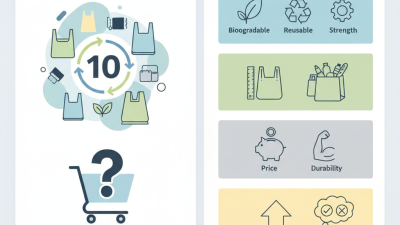
In 2026, plastic bag selection must begin with the wider packaging problem. Packaging represents about 40% of plastic use, so every bag specification matters. A thinner bag may reduce material, but it can fail during loading or transport. That failure creates waste, complaints, and replacement shipments. Set the required size, load weight, thickness, seal strength, and reuse expectations before contacting suppliers. Do not treat appearance as the main measure.
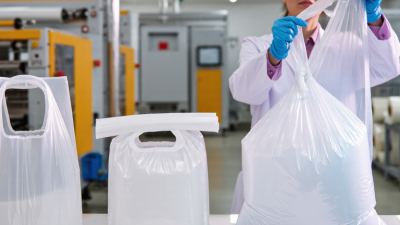
Ask each plastic bag printing supplier for clear production evidence. Request material specifications, recycled-content records, ink safety information, laboratory test results, and batch traceability. Check whether the supplier measures thickness across several points, not only one sample. Inspect printed bags for blurred text, weak seals, pinholes, and color variation. Small defects matter. A reliable supplier should explain corrective actions, inspection frequency, and realistic lead times.
Cost comparisons need more than a unit price. Compare material weight, printing coverage, minimum order quantities, shipping protection, and expected defect rates. My first supplier comparison focused too heavily on price. It missed the cost of damaged cartons and delayed deliveries. That was a poor assumption. Suppliers should also provide samples from normal production, not carefully selected showroom pieces. Keep a signed specification sheet, approve a physical sample, and review performance after the first shipment. The best choice may be less cheap, but more consistent.
Set 2026 Bag Requirements: Packaging Represents About 40% of Plastic Use
| Evaluation Dimension | 2026 Requirement or Benchmark | Recommended Acceptance Criteria | Verification Method | Suggested Weight |
|---|---|---|---|---|
| Material Identification | Clearly declare the polymer type, recycled content, additives, and food-contact status where applicable. | Material specification and certificate must match the production sample and purchase order. | Review technical data sheets, declarations of conformity, and independent laboratory reports. | 10% |
| Bag Thickness | Specify thickness in micrometres (µm) with a defined tolerance instead of relying only on “gauge” or “mil.” | Use a target thickness and tolerance agreed in writing; 1 mil equals 25.4 µm. | Measure multiple points across the roll or finished bag using a calibrated thickness gauge. | 8% |
| Load-Bearing Performance | Define the intended product weight, carrying distance, storage conditions, and reuse expectation. | The sample must pass the agreed load, drop, seam, and handle tests without tearing or unacceptable deformation. | Use a written test protocol with sample size, load level, test duration, temperature, and pass/fail rules. | 15% |
| Printing Quality | Artwork must remain legible after folding, rubbing, handling, and normal storage. | No critical text, barcode, warning, or regulatory information may be obscured, smeared, or materially distorted. | Check color proof, print registration, ink adhesion, rub resistance, and barcode readability. | 15% |
| Color Control | Use an approved color reference and define the acceptable color difference before mass production. | A practical starting point is an agreed Delta E tolerance, such as ΔE00 ≤ 3 for important brand colors, subject to substrate and measurement method. | Compare production samples with the approved proof under standardized lighting using a calibrated spectrophotometer. | 8% |
| Recyclability Design | Prefer designs that avoid unnecessary material combinations, difficult-to-remove components, and incompatible layers. | Provide the bag structure, layer composition, ink type, adhesive details, and recycling limitations in writing. | Review the packaging design against the applicable local collection and recycling system. | 12% |
| Recycled Content | If recycled plastic is specified, define the percentage, source, chain of custody, and quality limits. | The delivered material must meet the contracted recycled-content percentage and remain suitable for its intended use. | Check supplier declarations, mass-balance records where relevant, and periodic third-party verification. | 10% |
| Food-Contact Compliance | For food packaging, all layers, inks, coatings, and adhesives must be suitable for the intended food-contact conditions. | Documentation must identify the regulated market, food type, contact time, temperature, and applicable migration limits. | Review declarations of compliance and migration test reports from qualified laboratories. | 8% |
| Production Capacity | Capacity must cover forecast volume, seasonal peaks, color changes, artwork changes, and contingency requirements. | Supplier provides confirmed monthly capacity, minimum order quantity, lead time, and backup planning. | Review production schedules, sample lead times, capacity statements, and historical on-time delivery data. | 7% |
| Quality Management | Use documented inspection procedures for raw materials, printing, sealing, dimensions, packing, and final release. | Require batch traceability, retained samples, nonconformance records, and corrective-action procedures. | Audit quality records and conduct pre-shipment inspection using an agreed sampling plan. | 5% |
| Total Evaluation Score | Select the supplier with the strongest total score, not simply the lowest quotation. | Recommended approval threshold: 80 points out of 100, with no critical failure in compliance, safety, or performance. | Score each category after document review, sample testing, and commercial confirmation. | 100% |
Key 2026 Planning Facts
Reference Frameworks
ISO 18606 for packaging and organic recycling; EN 13432 for requirements for packaging recoverable through industrial composting; ASTM D6400 for labeling plastics designed to be aerobically composted in municipal and industrial facilities; ISO 2859-1 for sampling procedures for inspection by attributes.
Note: Performance targets should be finalized according to the bag format, material structure, intended load, destination market, applicable regulations, and actual recycling or disposal conditions.