How to Choose the Right Polythene Bags for Your Business?
In today's fast-paced business environment, selecting the right Polythene Bags is crucial. With the growing emphasis on sustainability, businesses often face challenges. An expert in the field, Dr. Emily Carter, states, "Choosing the right polythene bags can define your brand's commitment to quality and the environment." Her insights underscore the weight of this decision.
The variety of polythene bags available can be overwhelming. From thickness to size, each aspect plays a role in functionality and brand image. It is essential to evaluate your specific needs carefully. For instance, a retailer may require strong, durable bags, whereas an online seller might focus on lightweight, cost-effective options. Each choice has its impact.
Moreover, the decision is not always straightforward. Many businesses overlook factors like recycling options or production processes. These missteps can lead to negative perceptions among consumers. Reflecting on these challenges is necessary for making informed decisions in the realm of Polythene Bags.

Understanding the Different Types of Polythene Bags Available
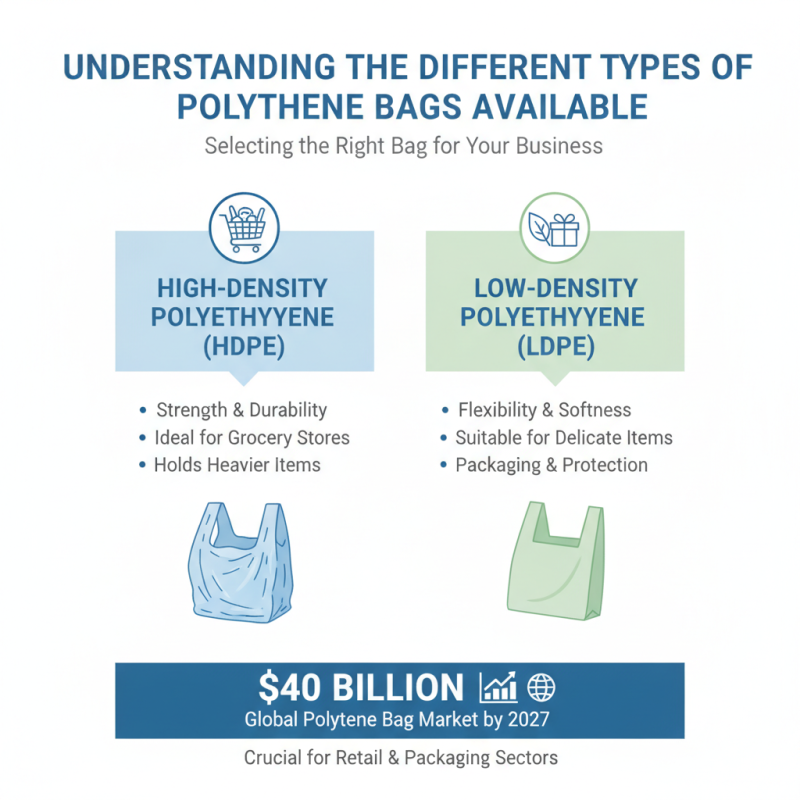
When selecting polythene bags for your business, understanding their various types is crucial. The two primary categories are high-density polyethylene (HDPE) and low-density polyethylene (LDPE). HDPE bags are known for their strength and durability, making them ideal for grocery stores. They can hold heavier items without tearing. Conversely, LDPE bags offer flexibility and are softer, making them suitable for packaging delicate items. Reports indicate that the global polythene bag market is projected to reach $40 billion by 2027, highlighting their significance in retail and packaging sectors.
Biodegradable polythene bags have gained traction in recent years. These environmentally friendly options decompose more quickly than traditional bags, appealing to eco-conscious consumers. A study showed that 53% of shoppers prefer stores that utilize sustainable packaging. However, the cost of biodegradable options may be a consideration for some businesses. It’s essential to weigh the environmental benefits against your budget constraints.
In addition, consider the thickness of the bags. Standard thickness is around 50 microns, suitable for most applications, but thicker variations are available. The right thickness impacts not just durability but also the customer experience. Many businesses overlook these details, leading to dissatisfied customers when bags fail to meet their expectations. Therefore, take the time to evaluate the options available thoroughly.
Evaluating the Durability and Strength Requirements for Your Products
Choosing the right polythene bags for your business hinges largely on understanding durability and strength. Polythene bags come in various thicknesses. Thicker bags are often more robust but may be less flexible. Consider the types of products you plan to use these bags for. Delicate items need stronger bags to avoid damage during transport.
Evaluate the weight of your products. A lightweight product may not require an ultra-durable bag. However, for heavy items, investing in high-strength polythene is crucial. Remember, a weak bag can lead to product loss and damaged reputation.
Each business faces its own challenges in selecting the right materials. Keep in mind environmental factors. Humidity can affect bag strength. Poor quality bags may tear under stress. Researching suppliers and their product specifications is vital.
Transparency in materials used enhances reliability. Reflect on past experiences. Did a previous bag fail? Learn from it. Each failure can inform better choices moving forward. Consider conducting strength tests for assurance.
Considering Environmental Impact and Sustainability Options
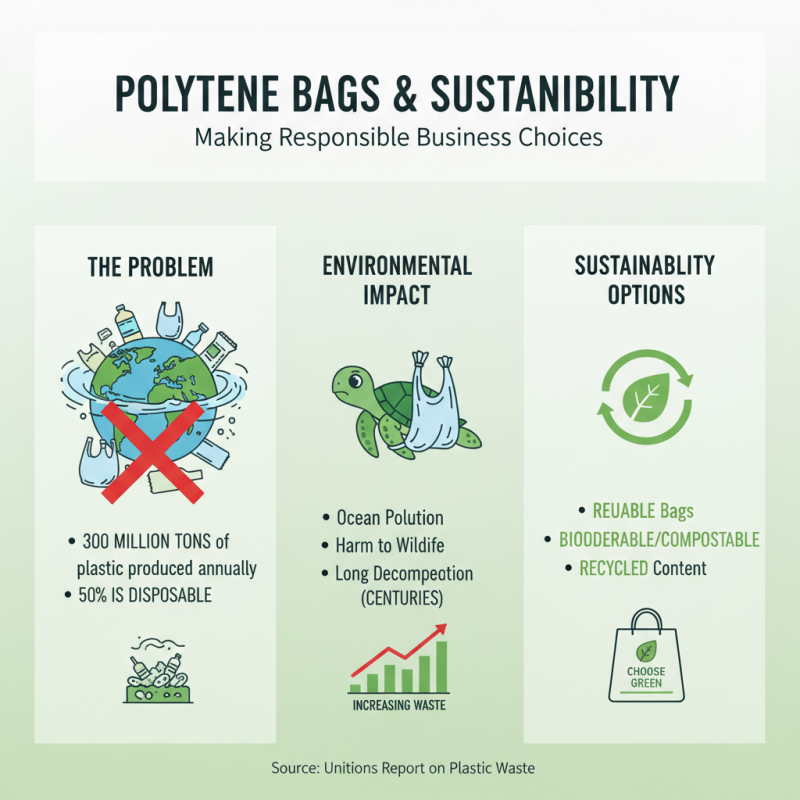
When choosing polythene bags for your business, sustainability is crucial. The environmental impact of plastic waste is alarming. According to a report from the United Nations, around 300 million tons of plastic are produced each year, and an estimated 50% of this is disposable. This highlights the need for businesses to consider alternative options.
Many companies are now opting for biodegradable polythene bags. These bags break down more easily in the environment, offering a sustainable solution. According to a study published in "Environmental Science & Technology," biodegradable plastics can reduce landfill accumulation significantly. This option might be costlier upfront, but it can enhance your brand's reputation. Consumers prefer sustainable practices.
Recyclability is another factor to consider. Traditional polythene can be reused multiple times. According to the Ellen MacArthur Foundation, improving recycling rates can decrease plastic pollution by up to 45%. Investing in high-quality, recyclable bags can yield long-term savings. This will require a shift in mindset, as well as potential price increases in the short term. Businesses need to balance cost and environmental responsibility.
Assessing Size and Capacity Needs for Your Business Applications
Choosing the right size and capacity for polythene bags is crucial for businesses. Often, companies overlook this step, leading to wasted resources. According to a recent industry report, 40% of businesses face challenges due to incorrect bag size. This can result in product damage and increased costs.
Understanding your product dimensions is essential. For small items, a 20x30 cm bag works well, while larger products may require a 50x70 cm option. Research shows that 75% of successful businesses regularly assess their packaging needs. They adapt their bag sizes based on inventory changes.
It’s important to consider the load capacity of bags. Standard polythene bags can hold around 5-10 kg. However, some items may require reinforced options. A study indicated that 30% of companies suffered losses from using inadequate bags. This highlights the need for careful evaluation and ongoing adjustments. Regular assessments can prevent these mistakes and improve overall efficiency.
Choosing the Right Supplier for Quality and Cost-Effectiveness
Choosing the right supplier for polythene bags impacts quality and cost. In a market where demand for sustainable packaging rises, selecting a reliable supplier is crucial. According to industry reports, the global polythene bag market was valued at around $4.5 billion in 2022 and is expected to grow substantially. Quality assurance and cost-effectiveness directly influence your business's performance.
When evaluating suppliers, focus on their certifications. ISO standards ensure quality management systems that meet industry demands. Verify if they provide eco-friendly options, as many consumers prefer sustainable products. Interestingly, reports show that 70% of consumers are willing to pay more for sustainability initiatives. This trend can lead to better brand loyalty.
Tips: Always request samples before committing. Assess their responsiveness and service quality during this stage. Prices can vary significantly. Comparing at least three suppliers helps identify a balanced option. Remember, the cheapest option might not always offer the best quality. Finding a trusted partner requires ongoing evaluation. Choose wisely to align with your business values and customer expectations.