Leave Your Message
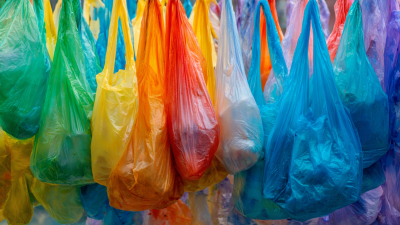
Choosing the best Polythene Bags in 2026 starts with the job, not the label. A thin carrier bag may suit lightweight groceries, while a stronger, gusseted bag can hold bulky goods without straining its seams. For clothing, a clear sleeve keeps fabric visible and shields it from dust. Small details matter: handle shape, thickness, closure, and how the bag will be stored or reused.
Waste and materials expert Annie Leonard offers a useful reminder: “There is no such thing as ‘away’. When we throw anything away it must go somewhere.” Her words make bag selection a practical decision, not just a price comparison. Consider recycled content, durability, and whether local collection services accept the material. Check the supplier’s specifications, too; a bag that looks sturdy on a screen may feel flimsy when loaded. Not every choice is neat.
This guide compares common options, including high- and low-density polythene, mailing bags, refuse sacks, and reusable designs. It explains where each type performs well, what trade-offs to expect, and which questions to ask before ordering. The “best” bag depends on its contents, handling, and intended use. A stronger bag is not automatically the better choice if it uses more material than the task requires. Small print matters.
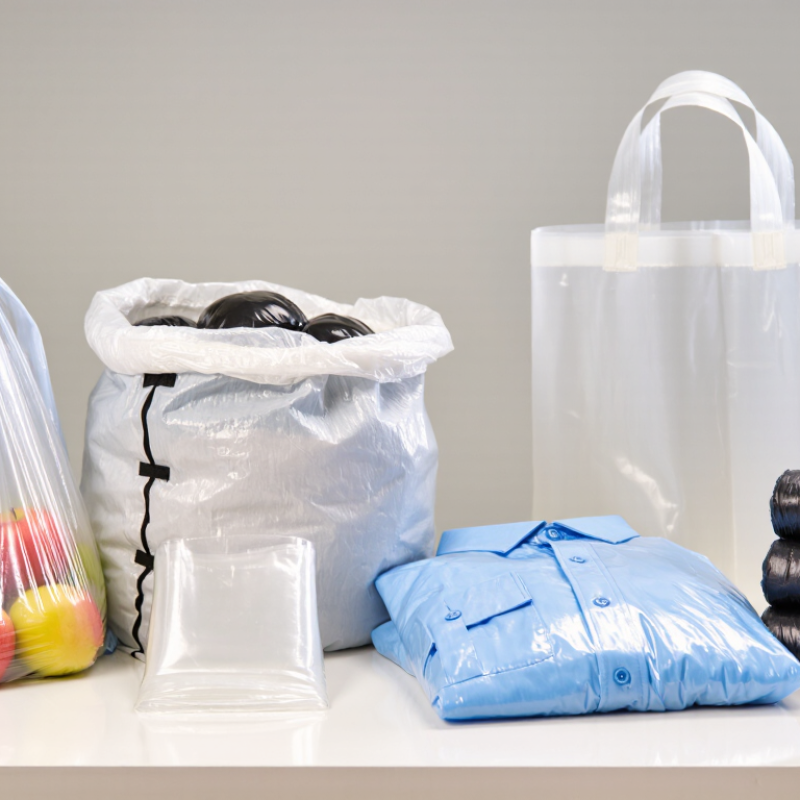
Polythene bags are flexible packaging made from polyethylene. Their differences start with the resin. Low-density polyethylene (LDPE) feels soft and bends quietly; it suits garments and goods needing a smooth finish. High-density polyethylene (HDPE) is thinner and crisper, often used for lightweight shopping or produce bags. Linear low-density polyethylene (LLDPE) can offer useful stretch and puncture resistance. These are tendencies, not guarantees: thickness, manufacturing and recycled content also affect performance.
Bags are also classified by shape and use. Flat bags have simple sealed sides, while gusseted bags expand to hold bulky items. T-shirt handles, loop handles and die-cut handles change how a bag is carried. Some have zip closures; others are open-ended or made for liners. The categories can overlap. A bag’s appearance alone rarely reveals its exact resin or strength.
Tips: Match the bag to the load, not just its label. Check dimensions, thickness and sample performance with the actual product. A sharp corner may puncture a thin film, even when the bag feels sturdy. Ask suppliers for material specifications, and test a small batch before ordering more. Reuse depends on the bag’s construction and condition. A “reusable” claim is not a substitute for checking.
| Type or classification | Typical characteristics | Common uses | Main advantages | Points to consider |
|---|---|---|---|---|
| LDPE (low-density polyethylene) | Flexible, soft, and relatively clear; often used where a pliable film is useful. | Garment bags, produce bags, liners, and general-purpose packaging. | Good flexibility and moisture resistance; easy to seal in suitable packaging formats. | Usually less stiff than HDPE at a similar thickness. Recycling acceptance depends on local collection rules and the bag’s condition. |
| HDPE (high-density polyethylene) | Stiffer and crisper than LDPE; can be made into thin, lightweight film. | Retail carrier bags, grocery bags, bin liners, and lightweight packaging. | Good stiffness-to-weight performance and useful resistance to moisture and many everyday substances. | Can feel less soft and may be noisier than LDPE film. Thin bags can be difficult to sort in some recycling systems. |
| LLDPE (linear low-density polyethylene) | Tough, flexible film with good resistance to stretching and punctures. | Stretch film, heavy-duty liners, and bags for products with irregular edges. | Often chosen when toughness and stretch are important for containing or securing goods. | Specific performance depends on film formulation and thickness; multilayer or contaminated packaging may not be accepted for recycling locally. |
| Recycled-content polyethylene | Polyethylene film incorporating recycled material; appearance and performance vary with the feedstock and specification. | Refuse sacks, construction liners, mailing bags, and other packaging suited to the required grade. | Can reduce demand for virgin resin when recycled material is available and appropriate for the application. | Confirm the recycled-content percentage, performance requirements, and suitability for food contact. Food-contact use is subject to applicable regulations. |
| Flat bag | A simple two-panel bag with a bottom seal and no side gussets. | Documents, clothing, printed materials, and flat or low-profile products. | Simple construction and efficient storage; available in different polyethylene grades and thicknesses. | Offers limited volume for bulky items compared with gusseted formats. |
| Gusseted bag | Includes folded side or bottom panels that expand to provide extra capacity. | Food packaging, parts, bulky goods, and bin liners. | Can accommodate wider or bulkier contents while lying relatively flat when empty. | Choose the gusset depth and film strength to suit the product; the bag’s shape alone does not determine its material properties. |
| Carrier bag | A bag made for carrying purchases, often with die-cut or loop handles. | Retail and grocery shopping. | Convenient to carry and can be made from HDPE, LDPE, or other polyethylene film specifications. | Local rules may restrict some single-use carrier bags. Reuse and end-of-life options depend on the bag design and local collection facilities. |
| Drawstring or refuse sack | A bag with a closure feature or a construction intended to hold waste. | Household, commercial, and facility waste collection. | Convenient closure and containment; material and thickness can be selected for the expected load. | Check load, size, and puncture requirements. Bags contaminated with waste are generally not suitable for ordinary film recycling streams. |
Polythene is a common name for polyethylene. The best choice depends on the contents, required strength and flexibility, bag format, applicable regulations, and local recycling options. Recycling acceptance varies by location and facility.