Top 10 Trends Shaping the Future of the Packaging Market?
The Packaging Market is undergoing significant changes as consumer preferences shift. These changes are driven by sustainability, technology, and innovation. Brands are now more focused on eco-friendly materials. Consumers demand packaging that reduces waste. This trend is reshaping how products are presented.
Innovations in design and functionality are also gaining importance. Smart packaging solutions are emerging, catering to tech-savvy shoppers. These advancements can enhance user experience and improve product safety. However, some brands struggle to keep up with rapid changes. They often face challenges in balancing quality, cost, and sustainability.
As the Packaging Market evolves, companies must adapt to remain competitive. They need to consider consumer feedback and market trends carefully. Failure to do so may lead to missed opportunities. The journey towards a more sustainable future can be complex and requires constant reflection and adaptation.

Emergence of Sustainable Packaging Solutions in Consumer Goods
The shift toward sustainable packaging is transforming the consumer goods market. More companies are seeking eco-friendly options. Biodegradable materials and recyclable designs are gaining traction. These solutions help reduce waste and environmental impact. However, challenges remain.
Not all sustainable materials are cost-effective. Some consumers may still prioritize price over sustainability. Packaging performance is crucial, too. It must protect the product adequately. Companies face pressure to balance eco-friendliness with functionality. This balance is not easy to achieve.
Innovations are emerging, yet not all are successful. Some products may claim to be green but lack real impact. Transparency is key. Consumers demand to know what they are buying. They want to trust the brands they choose. As the market evolves, companies must adapt. Sustainable packaging isn't just a trend; it’s a necessity for the future.
Top 10 Trends Shaping the Future of the Packaging Market
This chart illustrates the top trends influencing the future of the packaging market, focusing on the emergence of sustainable packaging solutions in consumer goods.
Impact of E-commerce on Packaging Design and Innovation
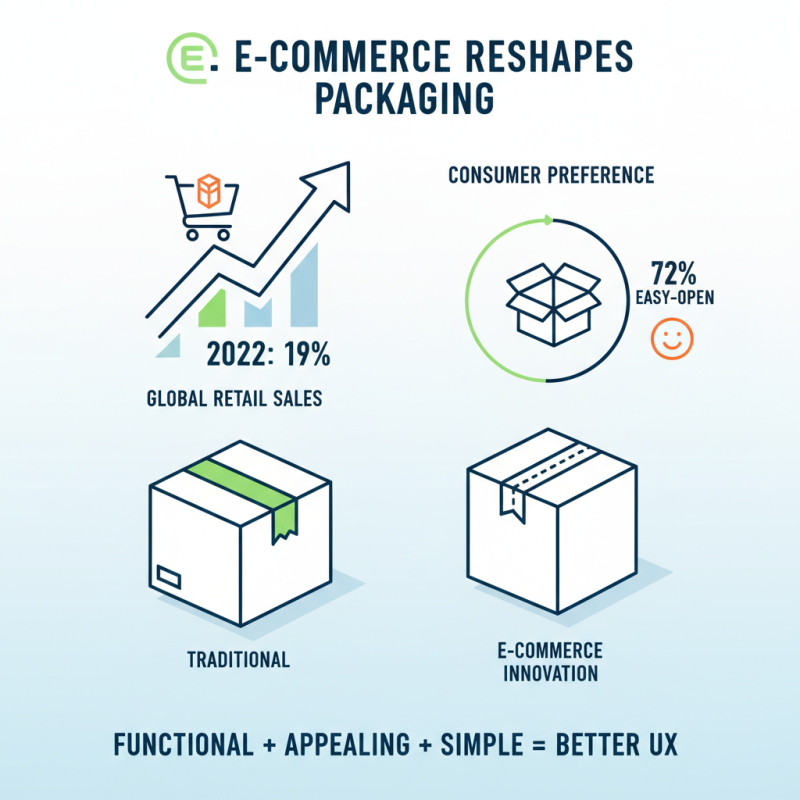
The rise of e-commerce is significantly reshaping packaging design and innovation. In 2022, e-commerce accounted for 19% of global retail sales. This surge demands packaging that is not just functional but also appealing. In fact, 72% of consumers prefer packaging that is easy to open. Simple packaging can enhance the user experience.
Materials play a crucial role in this packaging evolution. Sustainable options are in high demand. Reports show 57% of consumers are willing to pay more for eco-friendly packaging. However, not all solutions are practical. Some biodegradable materials might compromise product safety. Brands must balance sustainability with protection.
Tips:
1. Use minimalist designs to reduce material waste.
2. Incorporate bold visuals for online appeal.
3. Focus on user-friendly features like tear strips.
The relationship between packaging and e-commerce continues to evolve. As online shopping grows, brands face challenges in balancing aesthetics, functionality, and sustainability. Reflecting on current strategies is essential to meet future demands. Keeping up with trends can be daunting, yet worthwhile.
Advancements in Smart Packaging Technologies for Enhanced Consumer Experience
The packaging market is witnessing a revolution thanks to advancements in
smart packaging technologies. These innovations aim to
enhance consumer experiences significantly. According to a recent report by MarketsandMarkets, the smart
packaging market is projected to reach $38.2 billion by 2027, growing at a
CAGR of 6.4%. This growth highlights the rising consumer demand for
interactive and informative packaging solutions.
Smart packaging includes features such as QR codes and NFC technology that connect
consumers to a wealth of information. A 2022 survey revealed that 65% of
consumers prefer products with enhanced connectivity. They want to know more about the items they purchase. This
increase in consumer engagement through packaging helps brands build trust and loyalty. However,
there are challenges. Not all consumers understand how to use smart technologies effectively, leading to frustration.
Sustainability is another key concern. Reports indicate that 47% of consumers
are willing to pay more for eco-friendly packaging. Yet, there’s
an ongoing debate about how smart technology impacts recyclability. Many packages become
complex, making recycling difficult. Finding a balance between
innovation and environmental responsibility is essential. It remains
to be seen how the industry will approach these issues in the coming years.
Shift Towards Minimalist and Functional Packaging Aesthetics
The packaging industry is undergoing a significant transformation, particularly with a shift towards minimalist and functional aesthetics. This trend aligns with consumer preferences for simplicity and sustainability. In fact, a recent report indicates that 70% of consumers prefer packaging that is not only visually appealing but also easy to recycle. Minimalist designs reduce waste, which resonates with environmentally conscious shoppers.
The focus on functionality is equally important. Packaging that enhances user experience is becoming a priority. Features like resealable openings and easy-to-handle designs are gaining traction. These enhancements improve convenience, particularly in food and beverage sectors. In a survey, 56% of respondents noted they are likely to choose products with user-friendly packaging.
This shift is not without challenges. While companies strive for minimalism, balancing aesthetics and functionality can be tough. Some brands struggle to communicate their values through straightforward designs. Nonetheless, the push for simplicity appears to be a significant force. It reflects a broader movement towards sustainable practices in packaging, which is crucial for the industry’s future. As such, companies need to rethink their strategies to meet these evolving expectations.
Top 10 Trends Shaping the Future of the Packaging Market
| Trend |
Description |
Impact |
| Sustainable Packaging |
Increasing focus on eco-friendly materials and recycling. |
Reduced environmental impact and improved brand loyalty. |
| Minimalist Design |
Simple and clean packaging designs to enhance appeal. |
Increased shelf visibility and customer connection. |
| Smart Packaging |
Integration of technology for tracking and interaction. |
Enhanced consumer experience and product safety. |
| Functional Packaging |
Ease of use features like resealable and single-serve formats. |
Improved convenience and waste reduction. |
| Personalization |
Custom packaging solutions to cater to individual preferences. |
Increased customer satisfaction and engagement. |
| E-commerce Growth |
Adapting packaging for shipping and online sales. |
Enhanced protection and reduced shipping costs. |
| Reusability |
Focus on designs that encourage multiple uses. |
Lower waste generation and cost savings for consumers. |
| Innovative Materials |
Exploring new materials like bioplastics and plant-based options. |
Enhanced sustainability and performance. |
| Health and Safety |
Increased emphasis on hygiene and protective packaging. |
Consumer confidence and market growth. |
Regulatory Changes Driving Eco-friendly Practices in Packaging Industry
Regulatory changes are reshaping the packaging industry. Governments are implementing stricter environmental regulations. These laws aim to reduce plastic waste and carbon emissions. A report from the Smithers Group highlights that over 60% of consumers prefer eco-friendly packaging options. This shift is influencing brands to rethink their packaging strategies.
In 2021, the European Union targeted a significant reduction in single-use plastics. Industries are feeling the pressure to innovate. Biodegradable materials and recyclable options are now in demand. Reports suggest that the global eco-packaging market will reach $500 billion by 2027. Despite this growth, not all companies are meeting these regulations effectively. Some still rely on outdated materials, resulting in increased scrutiny.
While progress is evident, challenges persist. Many small businesses struggle to adapt due to cost factors. The transition to sustainable materials can be expensive. Additionally, maintaining product integrity while using eco-friendly materials remains a concern. As regulations evolve, the industry must keep pace or risk penalties. The shift toward more sustainable practices is encouraging, yet obstacles remain for broader implementation.