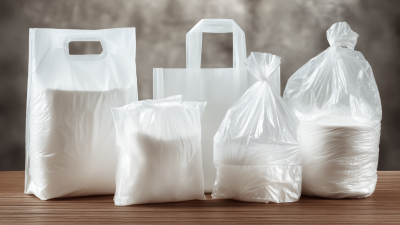
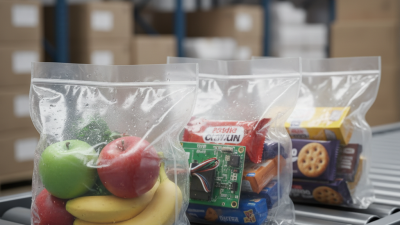
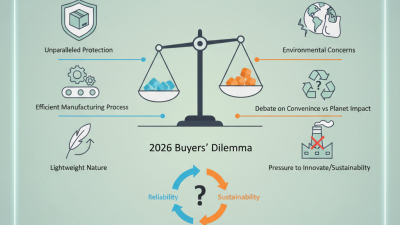
Buying the right Polystyrene Bag requires more than comparing prices or choosing the thickest option. Different bags suit different products, temperatures, handling conditions, and storage periods. A bag that feels strong in a showroom may tear when filled with sharp edges or stacked under pressure. Small details matter.
Experienced buyers usually check material thickness, dimensions, seal quality, clarity, and resistance to moisture. They also confirm whether the bag is suitable for the intended application. For food, medical, or sensitive products, reliable documentation and appropriate certifications should be reviewed carefully. Do not rely only on a supplier’s product photo. Ask for specifications, test results, and samples whenever possible.
A practical test can reveal more than a catalog description. Fill a sample bag, lift it gently, inspect the seams, and leave it under expected storage conditions. Notice whether the opening remains usable and whether the material becomes brittle. I once focused too heavily on unit cost and overlooked packaging waste. That decision seemed efficient, but it created extra handling time later. A better purchase considers performance, consistency, supplier communication, and total operating cost. The following tips explain how to compare Polystyrene Bag options with greater confidence, while recognizing that no single specification fits every use. Supplier claims should be checked. Your real conditions matter most.
Before choosing polystyrene bags, define what the package must protect. Measure the product, including corners, handles, and extra space for movement. A bag that looks economical may fail when its seams carry too much pressure.
Consider the product’s surface and storage conditions. Smooth items may need basic dust protection, while delicate parts require cushioning or a thicker inner layer. Moisture, heat, static electricity, and repeated handling can change the specification. In packaging trials, I check whether the bag tears around sharp edges after filling. Small details matter. Test real products, not empty samples.
Write the requirements in practical terms: bag dimensions, thickness, closure style, transparency, quantity, and expected shelf time. Ask for material information and quality records from the supplier. Sample testing should include stacking, dropping, opening, and sealing. I once focused too heavily on appearance and overlooked the closure strength. That mistake created avoidable rework. A clear checklist would have caught it earlier.
Choose packaging that fits the supply chain, not just the product. Consider warehouse temperature, transport vibration, worker handling, and disposal instructions. Confirm that the selected material suits your intended market and packaging requirements. If the product changes later, review the bag specification again. A perfect choice today may become unsuitable after one small design change.
Tip 1: Confirm the material. Some sellers use “polystyrene” loosely, so request the resin specification and test sheet.
Tip 2: Compare thickness in microns, not appearance. A glossy surface can still tear easily.
Tip 3: Test the seal area, because failures often begin at the edges.
Tip 4: Match thickness to the product’s weight, corners, and handling conditions. ASTM D1777 provides a recognized method for measuring plastic film thickness. Thin is not always economical.
Tip 5: Measure the product, then add clearance for closure and movement.
Tip 6: Check width, length, and usable internal dimensions separately.
Tip 7: Do not rely on nominal size alone. Manufacturing tolerances may reduce capacity. PlasticsEurope reported that packaging represented 39.5% of European plastics demand in 2022, showing how much material selection affects everyday logistics.
Tip 8: Ask for a stated weight capacity, supported by tensile or tear testing. ASTM D882 can help assess film strength. A heavier bag may still fail if its seams are weak.
Tip 9: Request samples and fill them with the real product. I would test stacking, drops, and sharp contact points.
Tip 10: Compare cost per usable bag, not cost per kilogram. The Flexible Packaging Association reported US flexible-packaging sales of about $39.1 billion in 2022, but market value does not prove suitability for your application. Recheck your assumptions. Real handling is messier than a specification sheet.
10 Tips for Buying the Right Polystyrene Bags
Insulation performance should guide your purchase. A thicker bag is not automatically better. Expanded polystyrene commonly offers thermal conductivity around 0.030–0.040 W/m·K, according to technical data from the EPS Industry Alliance. Lower conductivity usually means stronger resistance to heat transfer. Check the declared value, test temperature, and material density. These details matter during summer deliveries or long warehouse waits.
Keep contents within their required temperature range. The U.S. FDA Food Code 2022 recommends cold food storage at 5°C or below. A suitable bag should slow temperature changes, not replace refrigerants or controlled transport. Look for tight seams, a secure closure, and enough internal space for coolant packs. Crowding creates warm pockets. It happens more often than buyers expect. Place a temperature logger near the product, especially during trial shipments.
Protection also includes impact resistance. ISTA 3A testing evaluates packaged products under drops, vibration, and compression. Ask whether the complete bag design has been tested, rather than only the foam sheet. Sharp corners can puncture thin liners. Moisture can weaken poorly sealed areas. I once underestimated this detail during a short delivery test; the bag looked intact, but condensation reached the outer carton. Review test records, conditioning temperatures, and realistic handling conditions before ordering large quantities.
Higher-density expanded polystyrene (EPS) generally provides lower thermal conductivity, which can improve insulation performance. Use these indicative values as a comparison guide, then confirm the exact insulation rating, thickness, compression strength, moisture resistance, closure quality, and product dimensions on the supplier’s technical datasheet.
Closures decide whether a polystyrene bag protects contents or creates handling trouble. Test zip seals, adhesive flaps, and heat-sealed edges with gloved hands. A closure should open smoothly, then resist accidental release during transport. Smithers’ 2024 flexible packaging report values the global market at more than US$300 billion, showing how small design choices affect a major supply chain. The report also highlights demand for easier-to-handle packaging. This point is often underestimated.
Handling features deserve equal attention. Choose bags with reinforced lips, writable surfaces, or tear notches when workers need quick identification. Rounded corners can reduce snagging in crowded storage bins. For frequent access, a resealable closure may save time, but it can also collect dust if left open. I once selected a convenient flap that failed under repeated use. That mistake was avoidable.
Storage requirements should guide the material and bag dimensions. Check temperature limits, humidity exposure, compression, and contact with sharp edges. Keep bags away from direct sunlight and heat sources, using clean shelves rather than damp floors. ASTM D4169 and ISTA testing protocols can help assess package performance under distribution stress. The U.S. Environmental Protection Agency reported 82.2 million tons of packaging waste in 2018, so choosing the correct size also matters. Oversized bags waste space and material. Smaller is not always better. Allow enough room for safe closure without stretching the seams.
Choosing polystyrene bags requires more than comparing thickness and price. A thin sample may tear around sharp corners. A thicker bag may still fail if the seal is weak. Request product specifications, intended-use guidance, and recent test reports. Check tensile strength, seal performance, and temperature limits. Safety evidence should match the real application. Food contact, laboratory handling, and general packaging need different controls. Ask how complaints and nonconforming batches are recorded. Good paperwork is useful. It is not proof of every shipment.
Sustainability needs a practical review, not a green promise. Measure the bag’s weight and avoid excess material where protection remains adequate. Ask whether recycled content affects strength, cleanliness, or barrier performance. Some applications cannot accept it. Confirm disposal instructions for your location, because collection systems differ widely. Reuse may help, but only when contamination risks are controlled. A bag used once is not automatically the worst option; failed packaging can create more waste. This is easy to overlook.
Supplier reliability appears in small operational details. Request samples from production, not only polished showroom pieces. Compare five or ten bags from different cartons. Record seal consistency, odor, dimensions, and damage after handling. Review lead times, minimum order quantities, traceability, and backup capacity. A supplier should explain changes before delivery. Ask for a corrective-action process. Price still matters, yet an inexpensive bag can become costly during delays or returns. I would leave room for doubt. Documents can be current while factory performance changes. Recheck critical points at agreed intervals.
| Tip | Evaluation Dimension | What to Check | Recommended Evidence or Standard | Questions for the Supplier | Common Risk |
|---|---|---|---|---|---|
| 1 | Define the bag application | Identify whether the bag is intended for food contact, electronics protection, insulation, light-duty storage, or industrial packaging. Record the product weight, dimensions, temperature range, moisture exposure, and expected handling. | A written product specification should state polymer type, dimensions, thickness, tolerances, closure method, load requirements, and storage conditions. There is no single polystyrene-bag specification suitable for every use. | What exact product will be packed? What load and temperature limits have been tested? Is the material expanded polystyrene foam or solid polystyrene film? | Mismatch between bag design and application |
| 2 | Verify material identity | Confirm whether the product is polystyrene, expanded polystyrene, or a multilayer structure. Check thickness, density where relevant, additives, colorants, and recycled-content percentage. | Request a technical data sheet, bill of materials, and a recent certificate of analysis. For plastic packaging, resin identification code 6 is commonly associated with polystyrene, but the code alone does not prove composition or recyclability. | Is the bag monomaterial? Are processing aids, inks, adhesives, or flame retardants present? Can the supplier provide batch-level composition information? | Incorrect material or undisclosed additives |
| 3 | Check food-contact compliance when applicable | For food packaging, confirm compliance with the rules in the destination market and with the intended food type, contact time, and temperature. Do not rely on a general “food-safe” statement. | Examples include the applicable requirements for polystyrene under United States food-contact regulations and the European framework for materials intended to contact food, including plastic-material migration requirements. Obtain a declaration of compliance and supporting migration-test results. | Which jurisdiction is covered? What simulants, temperatures, and contact durations were used? Does the declaration cover the exact bag structure and additives? | Regulatory or migration non-compliance |
| 4 | Assess mechanical performance | Review tensile strength, elongation, puncture resistance, tear resistance, seam strength, and closure performance against the actual load and handling conditions. | For thin plastic film, tensile properties may be evaluated using ASTM D882 or an equivalent method. Seal-strength testing may use a suitable flexible-material method such as ASTM F88. Test methods must match the bag construction. | What are the minimum and average test values? Were tests performed in both machine and transverse directions? How are defects and failed seams controlled? | Tearing, leakage, or seam failure |
| 5 | Review chemical and physical safety | Check odor, surface cleanliness, static behavior, sharp edges, dust or bead shedding, and compatibility with the packed product. For electrical or sensitive goods, evaluate static-control requirements separately. | Request a current safety data sheet when required, restricted-substance information, and test results for odor or cleanliness where relevant. A safety data sheet does not by itself prove food-contact compliance. | Does the bag generate static? Is antistatic or conductive performance required? Are there controls for dust, loose foam beads, odor, and contamination? | Product contamination or static damage |
| 6 | Evaluate sustainability realistically | Compare material weight, recycled content, manufacturing waste, transport volume, reuse potential, and the disposal infrastructure available in the destination market. | Ask for a quantified recycled-content statement and supporting chain-of-custody records. Do not describe polystyrene as compostable unless the complete product has been independently certified to a recognized compostability standard, such as ASTM D6400 or EN 13432, where applicable. | Is recycled content pre-consumer or post-consumer? Can the bag be reused? Is polystyrene accepted by local collection systems, and is that acceptance documented? | Unsubstantiated environmental claims |
| 7 | Confirm end-of-life options | Determine whether the bag can be collected, sorted, and recycled in the markets where it will be discarded. Keep different polymers and incompatible laminates separated when required by local systems. | Use written guidance from the relevant waste-management authority or recycler. Recycling code 6 is an identification mark, not a guarantee that a local recycling program accepts the item. | Which facilities accept this exact bag format? Must labels, closures, or liners be removed? What contamination level is permitted? | Unavailable or impractical disposal route |
| 8 | Audit supplier quality controls | Review incoming-material inspection, in-process controls, final inspection, calibration, nonconformance handling, corrective action, and lot traceability. | An ISO 9001-certified quality-management system can provide useful process evidence, but certification does not guarantee that every bag meets the required specification. Request audit records or an equivalent quality plan. | Can every shipment be traced to a production lot? What sampling plan is used? How are complaints, recalls, and corrective actions documented? | Inconsistent quality between lots |
| 9 | Test samples before approval | Use production-representative samples to verify dimensions, thickness, strength, odor, fit, closure performance, transport durability, and compatibility with the packed product. | For distribution packaging, a test plan may reference an appropriate distribution-performance framework such as ASTM D4169. Agree on acceptance criteria before testing and retain approved samples as a reference standard. | Are samples made on the intended production line? Who pays for independent testing? What happens if the first sample passes but a later lot fails? | Unverified performance claims |
| 10 | Compare total supplier reliability | Assess lead time, minimum order quantity, capacity, contingency planning, change-control procedures, documentation quality, communication, and delivery performance. | Request references without relying solely on marketing claims, recent on-time-delivery data, a documented change-notification process, and written terms for defective goods, replacement, and continuity of supply. | What is the normal and peak monthly capacity? How much notice is given for resin, process, or tooling changes? Is there a qualified backup production plan? | Supply interruption or uncontrolled changes |