How to Choose Plastic Bags for Food Packaging in 2026?
In 2026, choosing a Plastic Bag For Food means matching the material to the food, the filling process, and the journey to the customer. A bag that works for dry crackers may fail with oily snacks or chilled produce. Start with practical questions: Does the food need protection from moisture, oxygen, light, or leaks? Will the bag be heat-sealed? What temperatures will it face during filling and storage? The answers help narrow choices such as polyethylene or polypropylene, but the material name alone is not enough. Check the bag’s intended food-contact use, seal performance, and supplier documentation. Then test it with the actual product. Small details matter.
Packaging scholar Dr. Susan Selke’s work offers a useful principle, paraphrased here rather than presented as a verbatim quotation: “Choose packaging for the food’s real protection needs, not just its appearance.” That distinction matters when a glossy sample looks sturdy but splits at the seal, or a thin bag clouds after chilling. Compare samples under realistic conditions, including handling, storage time, and transport. Ask suppliers for specifications, and keep records of what you tested. A checklist helps, but it cannot replace judgment. It is easy to focus on price and overlook a weak seal or poor fit. This guide explores the trade-offs, so buyers can choose with evidence—and reconsider when the first test exposes a flaw.
Define the Food Product’s Packaging and Storage Requirements
Before selecting a plastic bag, define the food and its journey. Is it wet, oily, acidic, fragile, or sensitive to oxygen? A sliced cheese portion needs different protection from dry rice or frozen berries. Note the fill temperature, expected storage temperature, and time before use. Cold chain changes everything. FAO’s 2019 report estimates that 14% of food is lost between harvest and retail. Packaging cannot prevent every loss, but the right barrier can help protect food during handling and storage.
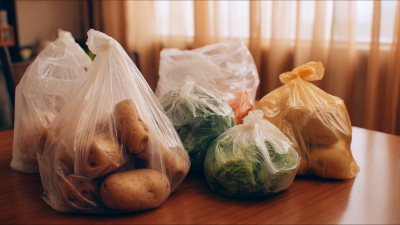
Specify the main risks in practical terms: moisture loss, condensation, oxygen exposure, light, punctures, or aroma transfer. For example, a chilled salad may need a bag that tolerates moisture while managing airflow; a frozen product needs material that stays flexible at low temperatures. Record the pack size, sealing method, and likely stacking pressure too. Small details matter. UNEP’s Food Waste Index Report 2024 estimates that 1.05 billion tonnes of food were wasted in 2022 across retail, food service, and households. That figure is not a packaging-performance measure, but it shows why shelf-life and handling requirements deserve careful attention.
Then test the bag with the actual food, seal, and storage conditions—not a convenient substitute. Check for leaks, seal opening, odor changes, and visible damage after realistic transport and storage. I would not assume a thicker bag is automatically better; it may add material without solving the product’s real failure point. A simple trial can expose that mismatch.
How to Choose Plastic Bags for Food Packaging in 2026
Define the Food Product’s Packaging and Storage Requirements
Start by identifying whether the product will be chilled, frozen, or stored at room temperature. These conditions help determine the bag’s required seal performance and resistance to moisture, oxygen, light, and low temperatures. Choose packaging suited to the specific food and storage conditions; the chart shows planning references, not packaging performance ratings.
Chilled and frozen reference points: FDA guidance recommends keeping refrigerators at 4°C (40°F) or below, and USDA guidance recommends freezers at −18°C (0°F). Ambient pantry storage is shown as 22.5°C, the midpoint of a typical 20–25°C room-temperature range; this is not a food-safety limit.
Compare Plastic Bag Materials and Barrier Properties
Choosing a food bag starts with the food itself. Dry crackers need protection from humidity, while roasted coffee can lose aroma when oxygen passes through the package. Polyethylene (PE) offers flexible, reliable moisture resistance and seals well, making it common for frozen foods and produce. Polypropylene (PP) handles heat better and can suit products packed warm. Small details matter. A bag that feels sturdy may still allow too much oxygen through.
For stronger barriers, multilayer films combine materials with different strengths. Polyester (PET) can add stiffness and clarity; nylon (PA) improves toughness and puncture resistance. A thin EVOH layer can slow oxygen transmission, but its performance may drop in very humid conditions unless protected by other layers. There is no perfect film. More layers can improve protection, yet make sorting or recycling more difficult in some local systems. Ask suppliers for measured oxygen and water-vapor transmission rates under conditions close to your storage and filling process. Test the actual food, too: oily snacks, sharp frozen edges, and warm seals can expose weaknesses that a sample sheet misses. A small trial run may reveal a seal that wrinkles or a bag that fogs unexpectedly.
Check Food-Contact Safety and 2026 Regulatory Requirements
Choosing a food bag starts with the food itself. Oily pastries, frozen vegetables, and acidic sauces can interact differently with packaging materials. Identify the food, storage temperature, contact time, and whether the bag will be heated. Then ask for documentation showing the specific material is suitable for that use. A general “food-safe” claim is not enough.
In 2026, requirements still depend on where the product is sold and how the packaging is used. Check the current rules in each destination market, including applicable migration limits, labeling duties, and restrictions on recycled content. Request a declaration of compliance and relevant test reports from the supplier. The reports should match the bag’s actual layers, inks, adhesives, and intended conditions—not just a similar sample. Small differences matter.
Keep traceable records of material specifications, test results, and supplier changes. Before a production run, review the printed bag and seal area; inks or adhesives should not compromise the food-contact layer. Ask whether testing reflects realistic worst-case contact, such as warm, fatty food held for several days. It can be tempting to trust an old certificate. I would not. Rules and formulations change, and a document may not cover your exact product. A qualified packaging specialist or local regulator can clarify uncertain requirements.
Select Bag Design, Closure, Size, and Printing Options
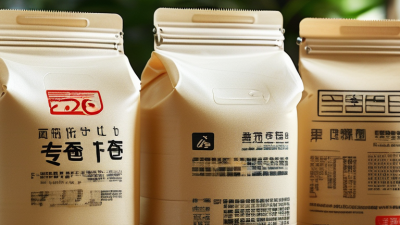
Choose a bag shape that suits how customers handle the food. Flat pouches work well for slim portions, while gusseted bags can stand upright on shelves. Moist, oily, or aromatic foods may need stronger barrier layers than dry snacks. A clear window helps shoppers see the product, but it may be unsuitable when light affects freshness. Match the closure to expected use: heat seals protect unopened contents, while resealable zippers help with repeated access. Check that the selected material is suitable for the food and storage conditions.
Tips: Fill a sample bag with the actual product. Check the seal, fit, and opening after handling. Small tests reveal awkward sizing fast.
Measure the product with room for filling and sealing, not just storage. An oversized bag can look sparse and waste material; a tight one may strain seams. Printing should keep essential details readable at the final bag size. Use strong contrast and avoid placing key text across folds or seals. Ask for a physical proof before approving a large run. It is easy to overdesign this part. A simpler layout often works better, though the first draft may need another look.
Evaluate Suppliers Through Sampling and Performance Testing
How to Choose Plastic Bags for Food Packaging in 2026?
Evaluate Suppliers Through Sampling and Performance Testing
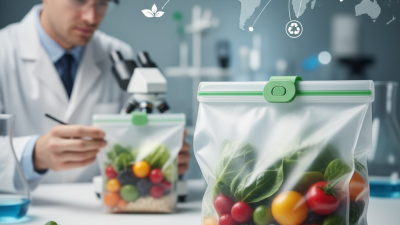
A pouch can look sturdy and still leak at the seal. Request samples made with the proposed film structure, thickness, and production process. Test them with your actual food, including oily or moist products, and expected storage conditions. Looks are not proof. The OECD’s Global Plastics Outlook (2022) reports that packaging generated 40% of global plastic waste in 2019. Reliable sampling can help identify weak designs before they become costly waste.
Ask suppliers to document seal-strength results using ASTM F88/F88M and leak-test results using ASTM F2338, where appropriate. For oxygen-sensitive foods, compare oxygen transmission data, such as results from ASTM D3985 testing. Run samples across more than one production lot; a single flawless pouch may hide variation. Record sealing temperature, pressure, and dwell time, then repeat tests after cold storage or handling. I would not approve a bag from appearance alone.
Tips: Label every sample with its lot, film thickness, and test conditions. Keep a retained sample for comparison. If results vary, pause and ask the supplier to investigate; a neat report is useful, but repeatable performance matters more.